2C Console
Product of
MarTech Managed
For
Marketing agencies
Page
Design concept

01 · thesis

The difference

Everyone automates output.
We connect it to judgement.

Content, scheduling, posting, reporting — every platform does that now. What none of them do is govern it: decide what should happen, approve it before it ships, and prove afterwards what changed.

02 · governance

Three differentiators that survive scrutiny

Strategy, then execution — with a record of both.

Stage 1

Goal

The client outcome the quarter is actually for.

Stage 2 · planned

Judgement

The Brain — what should happen, when and why. Not built yet.

Stage 3 · built

Approval

Nothing ships unseen. Client sign-off before it goes out.

Stage 4 · built

Proof

Every action attributable afterwards, in one record.

Differentiator 01Planned — not built

The Brain

A roadmap engine rather than a task list: turning business goals into a governed twelve-month plan that tells every tool what to do, when and why. It is the direction of the product and the reason it is being built. It does not exist today, and we would rather say so here than in week three.

Differentiator 02Built · in use

Human in the loop

Approval gates, invited client reviewers, tasks raised on sign-off, and an audit record of every action. Nothing reaches a client unseen — and delivery is what 48% of departing clients blame — the top reason clients go, and the one most agencies rank seventh.

Differentiator 03Built · in use

White-label, and your own data

Every client brand runs as an isolated tenant under your branding. The platform can run on your own database, in your region, with your keys — so the methodology, the brand and the data stay yours.

03 · today

What it replaces

Twelve subscriptions, or one governed console.

Twenty tools sit under one login — seventeen in daily use, three still being finished. They share the brand voice, the personas and the approvals, so the work is entered once.

Beforetwelve subscriptions

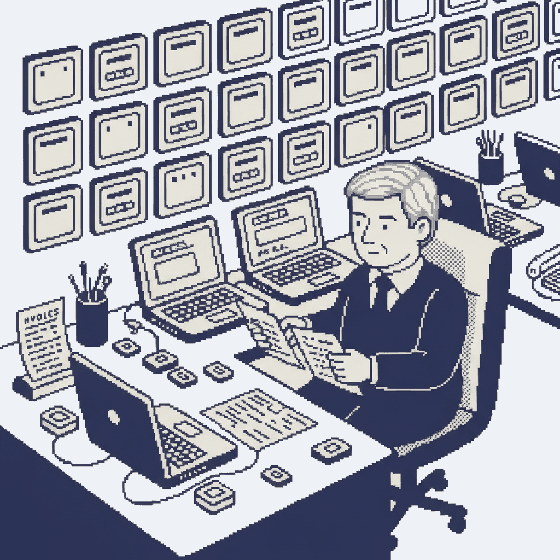
Pixel-art illustration: an account manager at a desk buried in three laptops, scattered security key fobs, paper invoices and a wall of separate login screens.

A login for every tool, for every client.Twelve renewal dates, and the brand's voice re-typed into each one.

2C Console12 subscriptions → 1 login, 1 bill

Afterone console

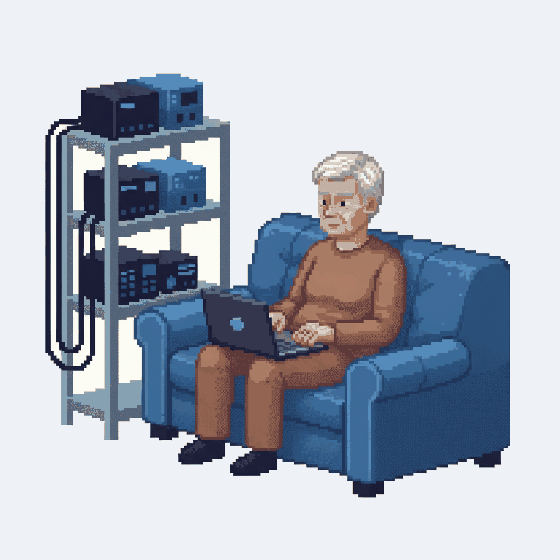
Pixel-art illustration: the same account manager seated calmly with a single laptop and a tidy equipment shelf behind.

Twelve client brands, one laptop.Nothing re-entered, because the tools share the same context.

04 · separation

Before you move ten clients in

Every client's work stays their own.

One day a client will ask how they are kept apart from your other accounts. The answer is structural, so you can give it plainly.

Separated — no brand can see another's work
Client brand

own voice · own personas
own content · own branding

Client brand

own voice · own personas
own content · own branding

Client brand

own voice · own personas
own content · own branding

Enforced below the app

Separation is enforced by the database itself, not by the application remembering to filter. A mistake in the code cannot reach past it.

One place decides access

Permissions are held centrally rather than scattered through the product, so who can reach a client's data is evidenced in one place.

Your database, your keys

The platform can run on the agency's own project — a different conversation from "trust our multi-tenant SaaS".

MFA is enforced for super and instance admins. Administrative actions are audit-logged. The platform targets GDPR alignment and WCAG 2.1 AA.

05 · the case

Serve more clients without adding people

Headcount is falling. Capacity has to come from somewhere.

Internal estimate80–150

hours a month across the team, for an agency running about ten client brands

Internal estimate£2–6k

a month of point-tool subscriptions covering roughly the same ground

Internal estimate2.5–5

hours a week per account manager, in triage and status-chasing alone

These are estimates, not measurements. They come from our own internal costing and have not been measured against a live client deployment. Treat them as a model to test in a pilot, not a result somebody else has already had.

You cannot out-sell a delivery problem.

Every client you lose becomes another new-business target. Start with one brand, run a real piece of work through it, and see whether the delivery holds.

One client account, one fortnight, no migration.